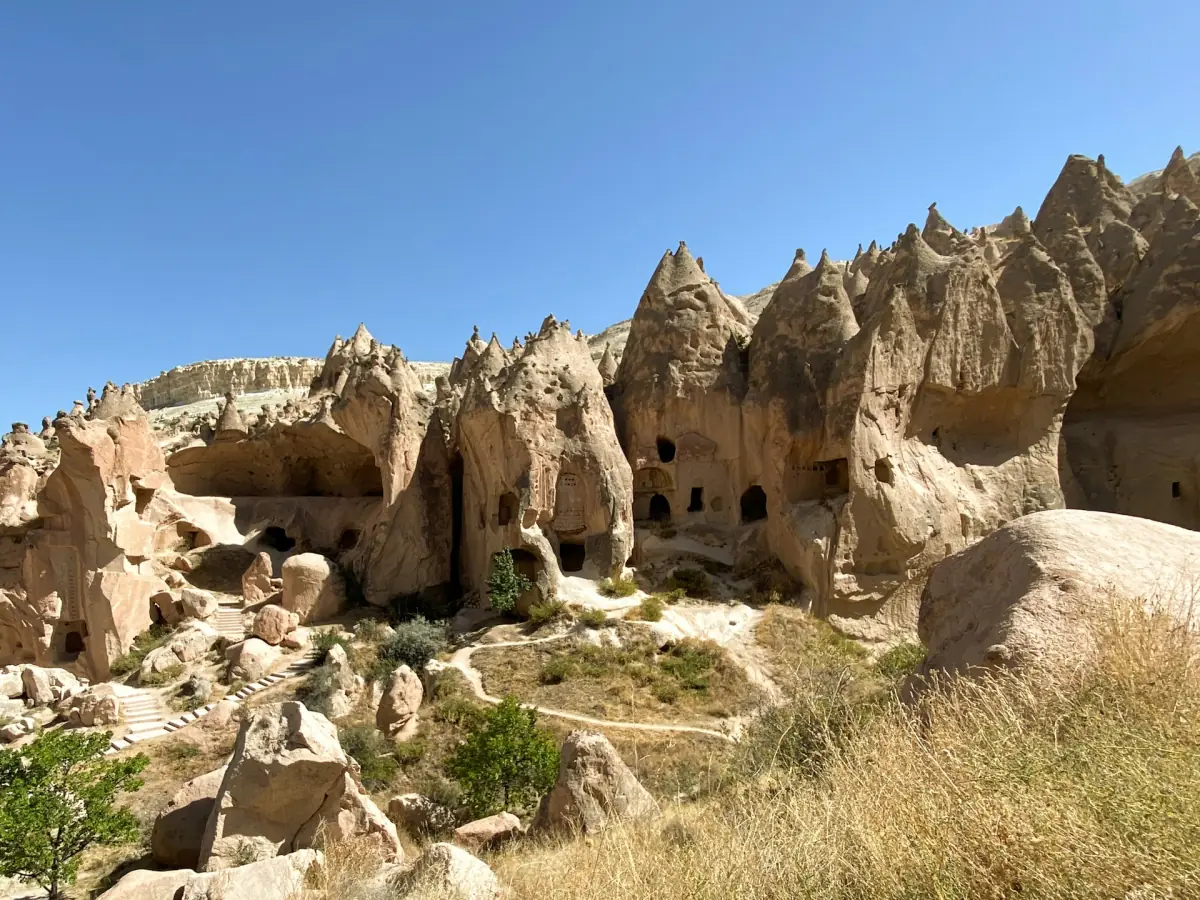
Cappadocia history in volcanic tuff
Cappadocia history is visible in the difference between the rock shapes worn down by water and wind and the rooms people carved into them. Volcanic material from Erciyes and Hasan Dağı provided the tuff from which the fairy chimneys took shape. People later worked the soft rock to make homes, places of worship, shelters and storage spaces.
Paşabağ is a stop for the natural forms. At Zelve and Göreme, look at doorways, rooms and decorated interiors to see how the same material became architecture. The valley walks from Göreme offer another way to see the landscape on foot.

Guided visits to rock sites
Choose the Paşabağ and Kaymaklı trip for included admission, or a Red Tour for Zelve and Devrent. The private Red Tour includes a vehicle and driver.
Hand-picked tours, booked through GetYourGuide and Viator. Prices are indicative starting prices in euros (as of November 2026). Tap a tour for live availability and the current price in your currency.

Private Red Tour through Zelve and Paşabağ
- Private vehicle with driver
- Professional local tour guide
- Air-conditioned transportation
The private route also visits Devrent and Love Valley. Museum and historic site tickets and lunch cost extra.
Check availability →
Paşabağ and Kaymaklı with admission
- Paşabağları and Kaymakli entrance fees
- Guide
- Air Conditioned VIP Vehicles
The eight-hour outing combines the fairy chimneys of Paşabağ with Kaymaklı Underground City. Confirm your pickup point after booking.
Check availability →
Paşabağ and Zelve with a guide
- Professional tourist guide
- Lunch if selected
- Museum entry tickets if selected
The route also visits Devrent and Love Valley. Lunch and museum tickets depend on the option selected; otherwise museum entry costs extra.
Check availability →Images – Paşabağ and Kaymaklı with admission: Cropped from a photo by Theugursevinc – CC BY-SA 4.0

Guided trips to fairy chimneys and rock sites
Compare circuits through Zelve and Paşabağ with a day trip that includes admission at Paşabağ and Kaymaklı Underground City.
Rock architecture at Zelve and Göreme
Zelve shows how a settlement used the cliffs for living space, while Göreme preserves churches, chapels, dining rooms and living quarters carved into rock. At Zelve, the open air museum spans three valleys on the northern slopes of Aktepe. Paşabağ is about 1 km from Zelve. Allow time for both stops if the aim is to see natural forms and built spaces in the same visit.
Frescoes and monastic life in Göreme
Göreme’s churches preserve geometric decoration and later biblical frescoes. During the iconoclastic period from 725 to 842, church decoration used more restrained symbolism. After 842, new rock churches received richer painted decoration. Putting these styles in sequence helps explain why the walls of different chapels look so different.
When the rock settlements were occupied
Göreme was a centre of monastic life from the 4th to the 13th century, and Zelve was a Christian settlement and religious centre between the 9th and 13th centuries. Zelve remained inhabited until 1952. The wider rock landscape, including underground cities such as Kaymaklı and Derinkuyu, became a World Heritage site in 1985.
Museum admission and MuseumPass Cappadocia
Göreme Open Air Museum costs EUR 20 for foreign adults, the Dark Church adds EUR 6, and the joint Zelve and Paşabağ ticket costs EUR 12 as of 21 November 2026. Tickets can be bought online or at the ticket office. Groups of 40 or more must arrange an appointment in advance.
The MuseumPass Cappadocia e-card costs EUR 65 as of 21 November 2026 and runs for three days from first use. It covers one admission per listed site, including the Dark Church, and excludes the night museum. MuseumPass Cappadocia and MüzeKart are separate products. Compare the pass with the individual tickets for the sites on your itinerary.
Daytime opening hours in Göreme
Göreme Open Air Museum’s regular hours are 08:00 to 17:00, with ticket sales ending at 16:15, as of 21 November 2026. Set aside time during the regular hours if the focus is the churches and frescoes. For local logistics, read the guide to planning a stay in Göreme.
What the guided history trips include
The guided Red Tour visits Zelve and Paşabağ with hotel pickup, and lunch and museum tickets depend on the option chosen. The seven-hour private Red Tour covers Zelve and Paşabağ with hotel pickup, with admission and lunch outside the base price. The eight-hour Paşabağ and Kaymaklı trip includes both admissions and starts from a hotel or the bus station.
For visits focused on both included admissions, choose the Paşabağ and Kaymaklı trip, while the private Red Tour suits groups that want a vehicle and guide for their party. Plan the Göreme Open Air Museum and individual church visits separately. The guide to private routes compares more itineraries. For a wider look at the stops and option differences, see the fairy chimney day trips.
Questions about Cappadocia’s rock sites
Göreme is the stop for painted churches, while Paşabağ and Zelve pair fairy chimneys with rock dwellings.
How much is admission to the Dark Church?
EUR 6 is the supplement for the Dark Church on top of the EUR 20 Göreme Open Air Museum ticket for foreign adults as of 21 November 2026. The MuseumPass Cappadocia e-card includes the church. Allow time to see it within the museum’s daytime opening hours.
Does MuseumPass Cappadocia include the night museum?
No. MuseumPass Cappadocia covers one admission per listed site during its three days from first use and excludes the night museum. Use the regular daytime opening hours when planning time for the churches and their artwork.
What can I see at Zelve and Paşabağ?
Zelve and Paşabağ let you see a former rock settlement and natural fairy chimneys on the same admission ticket. Look for carved openings along the cliffs at Zelve and the shapes of the formations at Paşabağ. For access to particular interiors, ask at the site.